
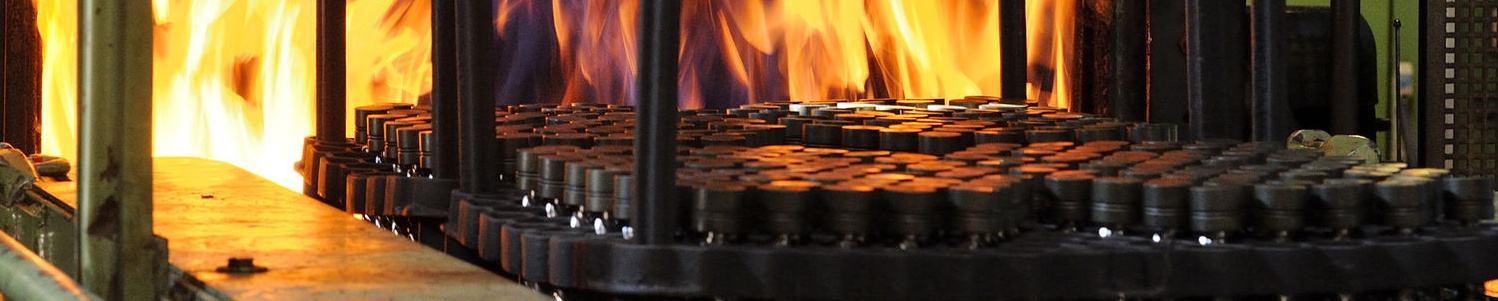
Enhancing Durability in Heat Treatment: Innovations in Large-Scale Water Quenching Trays
Introduction: The Challenge of Heat Treatment Fixtures Longevity in Water Quenching
In industrial manufacturing especially for forging parts, heat treatment processes like water quenching are critical for enhancing the mechanical properties of metals, such as hardness and wear resistance. However, the very feature that makes water quenching effective—its rapid cooling rate—poses a significant challenge: the extreme thermal shock on fixtures drastically shortens their service life. This translates to frequent replacements, downtime, and increased operational costs.
Why Fabricated Trays Dominate the Industry
While casting is a common method for producing heat-resistant components, most facilities opt for fabricated trays over cast ones, especially for large components (e.g., those exceeding 2000 mm in length and width). Fabricated trays are often easier to produce at scale and cost less in short term. However, their susceptibility to warping, cracking, and deformation under repeated thermal stress leads to hidden long-term expenses.
The FH Team’s Breakthrough: Extending Tray Lifespan Through Innovation
Drawing on collaborative expertise with furnace manufacturers and heat treatment plants, the FH team has pioneered a multi-faceted approach to design and produce large-scale water quenching trays with exceptional durability. By addressing material selection, structural design, and operational instructions, our solution significantly enhances tray performance. Below, we explore the three pillars of this technology:
1. Material Selection: Tailoring Alloys according to heat treatment recipe
The choice of material is critical in resisting thermal shock. The FH team analyzes the specific heat treatment recipe—including the max. working temperatures and cooling medium—to select high-performance alloys by adjusting the chemical composition of Carbon, Nickel, Chrome and Nb., to withstand oxidation and thermal cycling.
Under identical operating conditions, the difference in material performance is striking. A tray made from conventional ZG30Cr20Ni25 (HN) exhibited severe oxidation and deformation after just 3 months of service. In contrast, the new optimized alloy composition developed by our team remains in excellent condition even after 6 months of continuous use
2. Design Optimization: Engineering for inner Stress Releasing during water quenching
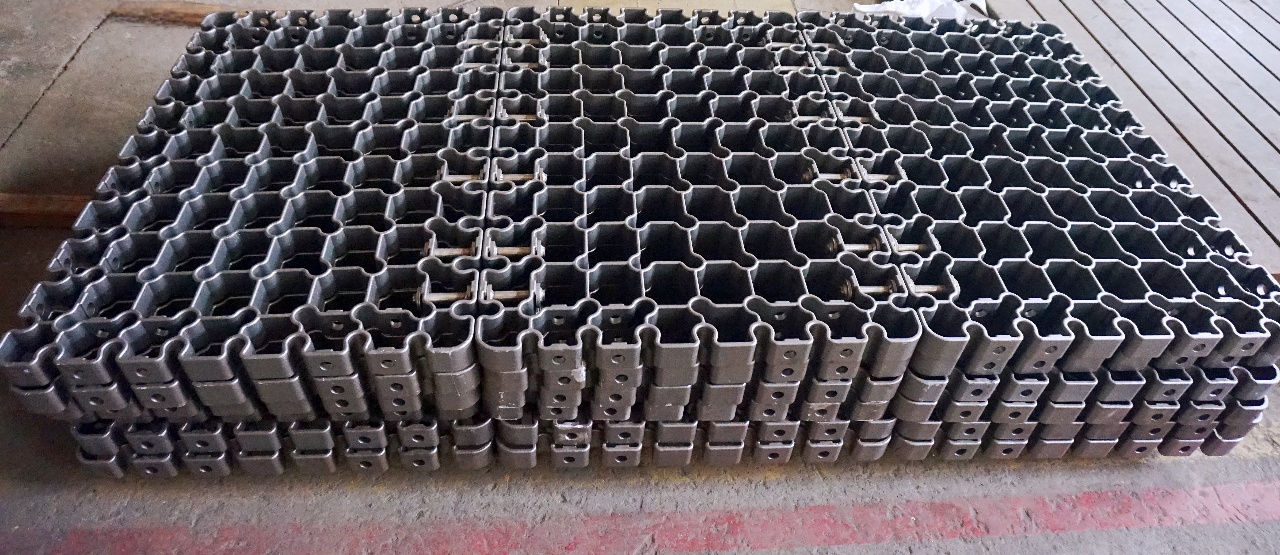
- Change the square hole to a round-cornered hole to release the inner strength effectively during quenching.
- Traditional tray designs often fail to distribute thermal stress evenly and release inner strength effectively. The FH team’s redesigned trays incorporate features such as:
- Use two holes to connect the bolts and trays instead of one hole. Leave some clearance between the bolts and trays to ensure the load is evenly distributed on the tray during transfer.
- These innovations are validated through ABAQUS to simulate thermal and mechanical loads, ensuring optimal performance.
3. Operational Guidelines: Maximizing Tray Lifespan
Even the most robust trays require proper handling. The FH team provides clear instructions for users, including:- Recommend customer to use the flat piers/supports inside furnace to avoid tray distortion. Our team can help design the furnace piers/supports
- When loading large and heavy parts onto the tray, it is advisable to place a pad between the parts and the tray. This allows the tray to cool down more quickly than the parts, which helps minimize thermal shock to the tray and can extend its lifespan.
4. Maintenance Instructions: To ensure optimal performance and longevity of the tray, please follow these maintenance guidelines:
- Flip the tray at least once a month.
- Conduct regular inspections for micro-cracks and surface degradation. Repair as necessary.
- Load parts evenly** on the tray to prevent undue stress.
- Regularly check the flatness of the furnace piers/supports. Correct any tray distortion as needed.
Results and Industry Impact
Early adopters of this technology report a 40–60% increase in tray service life compared to conventional solutions. For forging plants processing heavy machinery components, this translates to lower replacement costs. Additionally, the reduced need for frequent tray manufacturing aligns with sustainability goals by minimizing material waste.
Conclusion: Enhance Quenching Efficiency The FH team's comprehensive approach—integrating advanced materials, intelligent design, and proactive maintenance—establishes a new benchmark for durability in water quenching applications.